Online first
Bieżący numer
O czasopiśmie
Archiwum
Polityka etyki publikacyjnej
System antyplagiatowy
Instrukcje dla Autorów
Instrukcje dla Recenzentów
Rada Redakcyjna
Bazy indeksacyjne
Komitet Redakcyjny
Recenzenci
2025
2024
2023
2022
2021
2020
2019
2018
Kontakt
Klauzula przetwarzania danych osobowych (RODO)

PRACA ORYGINALNA
Trening karate a samokontrola, samoregulacja i strategie radzenia sobie ze stresem przez młodzież: badanie porównawcze
1
Poradnia Zdrowia Psychicznego dla Dzieci i Młodzieży, Dział Interwencji Psychosomatycznej, Wojewódzki Szpital Specjalistyczny im. J. Gromkowskiego, Wrocław, Polska
Autor do korespondencji
Krzysztof Jarosław Niedziela
Poradnia Zdrowia Psychicznego dla Dzieci i Młodzieży / Dział Interwencji Psychosomatycznej, Wojewódzki Szpital Specjalistyczny im. J. Gromkowskiego we Wrocławiu, ul. Koszarowa 5, 51-149, Wrocław, Polska
Poradnia Zdrowia Psychicznego dla Dzieci i Młodzieży / Dział Interwencji Psychosomatycznej, Wojewódzki Szpital Specjalistyczny im. J. Gromkowskiego we Wrocławiu, ul. Koszarowa 5, 51-149, Wrocław, Polska
Med Srod. 2025;28(4):142-147

SŁOWA KLUCZOWE
DZIEDZINY
STRESZCZENIE
Wprowadzenie i cel:
Opracowanie przedstawia wyniki badań własnych nad samokontrolą, samoregulacją i strategiami radzenia sobie ze stresem przez młodzież trenującą karate w porównaniu z osobami nieuprawiającymi sportu. Celem badania było określenie, czy regularne uprawianie karate różnicuje poziom samokontroli, samoregulacji oraz strategii radzenia sobie ze stresem w porównaniu z młodzieżą nieuprawiającą sportu, a także ustalenie zależności pomiędzy tymi zmiennymi.
Materiał i metody:
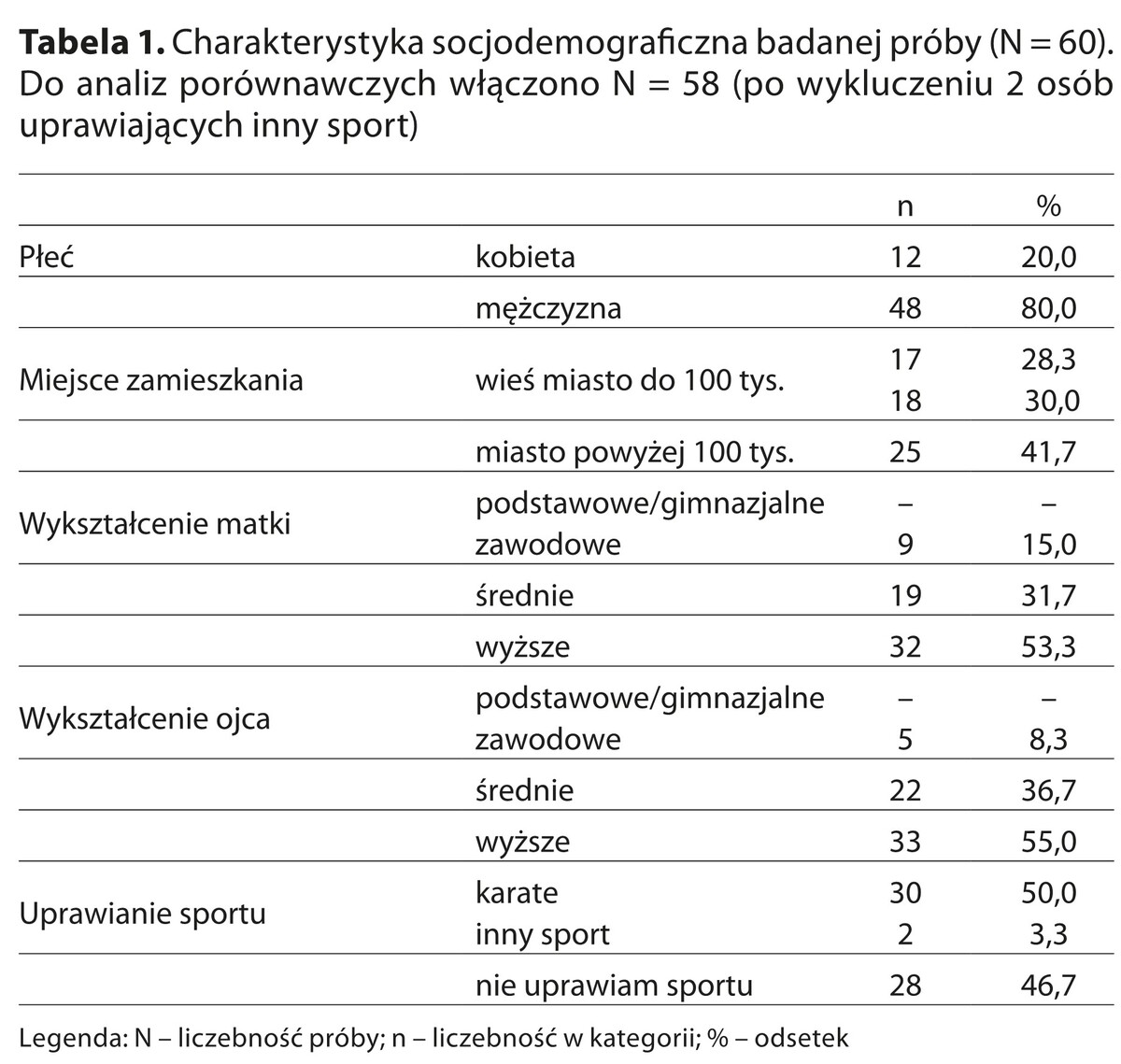
Badaniem objęto 60 osób w wieku 18–19 lat (M = 18,20). Zastosowano trzy wystandaryzowane narzędzia psychologiczne: Inwentarz Mini-COPE, Skalę Samokontroli oraz Skalę Samoregulacji Promocyjnej i Prewencyjnej.
Wyniki:
Młodzież trenująca karate uzyskała istotnie wyższe wyniki w zakresie samokontroli i samoregulacji promocyjnej niż młodzież nieuprawiająca sportu oraz częściej stosowała aktywne strategie radzenia sobie ze stresem. Stwierdzono dodatnią korelację pomiędzy samokontrolą i samoregulacją a aktywnym radzeniem sobie oraz ujemną – z bezradnością i unikaniem.
Wnioski:
Wyniki wskazują, że regularny trening karate sprzyja rozwojowi funkcji samoregulacyjnych i odporności emocjonalnej w późnej adolescencji, wspierając proces dojrzewania emocjonalnego i społecznego młodzieży. Uzyskane dane mogą stanowić punkt wyjścia do dalszych badań nad wykorzystaniem treningu karate jako interwencji wspierającej regulację emocji u młodzieży z zaburzeniami neurorozwojowymi, w tym ze spektrum autyzmu.
Opracowanie przedstawia wyniki badań własnych nad samokontrolą, samoregulacją i strategiami radzenia sobie ze stresem przez młodzież trenującą karate w porównaniu z osobami nieuprawiającymi sportu. Celem badania było określenie, czy regularne uprawianie karate różnicuje poziom samokontroli, samoregulacji oraz strategii radzenia sobie ze stresem w porównaniu z młodzieżą nieuprawiającą sportu, a także ustalenie zależności pomiędzy tymi zmiennymi.
Materiał i metody:
Badaniem objęto 60 osób w wieku 18–19 lat (M = 18,20). Zastosowano trzy wystandaryzowane narzędzia psychologiczne: Inwentarz Mini-COPE, Skalę Samokontroli oraz Skalę Samoregulacji Promocyjnej i Prewencyjnej.
Wyniki:
Młodzież trenująca karate uzyskała istotnie wyższe wyniki w zakresie samokontroli i samoregulacji promocyjnej niż młodzież nieuprawiająca sportu oraz częściej stosowała aktywne strategie radzenia sobie ze stresem. Stwierdzono dodatnią korelację pomiędzy samokontrolą i samoregulacją a aktywnym radzeniem sobie oraz ujemną – z bezradnością i unikaniem.
Wnioski:
Wyniki wskazują, że regularny trening karate sprzyja rozwojowi funkcji samoregulacyjnych i odporności emocjonalnej w późnej adolescencji, wspierając proces dojrzewania emocjonalnego i społecznego młodzieży. Uzyskane dane mogą stanowić punkt wyjścia do dalszych badań nad wykorzystaniem treningu karate jako interwencji wspierającej regulację emocji u młodzieży z zaburzeniami neurorozwojowymi, w tym ze spektrum autyzmu.
Introduction and objective:
The aim of the study is to determine whether regular karate training by adolescents differentiates their level of self-control, self-regulation, and strategies of coping with stress, compared to those who do not practice sports, and to examine the relationships between these variables. The research was conducted within a broader framework of analyses concerning psychological resources that promote adaptive functioning and emotional balance in youth.
Material and methods:
The study involved 60 participants aged 18–19 (M = 18.20). Three standardized psychological tools were used: the Mini-COPE Inventory, and the Self-Control Scale, both in Polish adaptation; and the Promotional and Preventive Self-Regulation Scale.
Results:
Adolescents practicing karate achieved significantly higher scores in self-control and promotion-focused self-regulation, and more frequently used active coping strategies. Positive correlations were found between self-control, self-regulation, and active coping, while negative correlations emerged with helplessness and avoidance.
Conclusions:
The results of the study showed that regular karate training supports the development of self-regulatory functions, emotional resilience, and adaptive coping in late adolescence. It may foster social maturity and mental wellbeing. The findings provide a rationale for further research on karate-based interventions supporting emotion regulation in adolescents with neurodevelopmental disorders, including autism spectrum disorder.
The aim of the study is to determine whether regular karate training by adolescents differentiates their level of self-control, self-regulation, and strategies of coping with stress, compared to those who do not practice sports, and to examine the relationships between these variables. The research was conducted within a broader framework of analyses concerning psychological resources that promote adaptive functioning and emotional balance in youth.
Material and methods:
The study involved 60 participants aged 18–19 (M = 18.20). Three standardized psychological tools were used: the Mini-COPE Inventory, and the Self-Control Scale, both in Polish adaptation; and the Promotional and Preventive Self-Regulation Scale.
Results:
Adolescents practicing karate achieved significantly higher scores in self-control and promotion-focused self-regulation, and more frequently used active coping strategies. Positive correlations were found between self-control, self-regulation, and active coping, while negative correlations emerged with helplessness and avoidance.
Conclusions:
The results of the study showed that regular karate training supports the development of self-regulatory functions, emotional resilience, and adaptive coping in late adolescence. It may foster social maturity and mental wellbeing. The findings provide a rationale for further research on karate-based interventions supporting emotion regulation in adolescents with neurodevelopmental disorders, including autism spectrum disorder.
REFERENCJE (22)
1.
Boat R, Cooper SB. Self-control and exercise: a review of the bi-directional relationship. Brain Plast. 2019;5(1):97–104.
2.
Englert C. Self-control: A critical discussion of a key concept in sport and exercise psychology. Psychol Sport Exerc. 2025;80:102878.
3.
Baumeister RF, Heatherton TF. Self-regulation failure: An overview. Psychol In. 1996;7(1):1–15.
4.
Baumeister RF, Bratslavsky E, Muraven M, Tice DM. Ego depletion: Is the active self a limited resource? J Pers Soc Psychol. 1998;74(5):1252–1265.
5.
Baumeister RF, Vohs KD, editors. Handbook of self-regulation. New York: Guilford Press; 2004.
6.
Potoczny W, Herzog-Krzywoszańska R, Krzywoszański L. Self-control and emotion regulation mediate the impact of karate training on satisfaction with life. Front Behav Neurosci. 2022;15:802564.
7.
Yildiz ME, Gunel I. The effect of karate practice on stress and self-confidence levels: An empirical practice among sedentary teenagers. Int J Eurasian Educ Cult. 2022;7(18):1385–1394.
8.
Ranjbar S, Shahbazi M, Rostami R, Bagherzadeh F. The impact of the type of sport on adolescents’ self-control. Int J Sport Stud Health. 2024;7(2):63–71.
9.
Buczny J. Skala samokontroli SCS – adaptacja polska. Gdynia: Akademia Morska; 2011.
10.
Kolańczyk A, Bąk W, Roczniewska M. Skala samoregulacji promocyjnej i prewencyjnej (SSPP). Psychol Społ. 2013;8(25):203–218.
11.
Carver CS. You want to measure coping but your protocol’s too long: Consider the Brief COPE. Int J Behav Med. 1997;4:92–100.
12.
Juczyński Z, Ogińska-Bulik N. Narzędzia do pomiaru stresu i radzenia sobie ze stresem. Warszawa: Pracownia Testów Psychologicznych PTP; 2009.
13.
Parzelski D, editor. Psychologia w sporcie. Teorie, badania, praktyka. Warszawa: Wydawnictwo Uniwersytetu Warszawskiego; 2006.
14.
Winiarczyk T. Uwarunkowania środowiskowe i treningowe rozwoju sprawności fizycznej. Kielce: Wydawnictwo UJK; 2019.
16.
Bandura A. Teoria społecznego uczenia się. Warszawa: Wydawnictwo Naukowe PWN; 2015.
17.
Antonovsky A. Rozwikłanie tajemnicy zdrowia. Jak radzić sobie ze stresem i nie zachorować. Warszawa: Instytut Psychiatrii i Neurologii; 2005.
18.
Carver CS, Scheier MF. Assessing coping strategies: A theoretically based approach. J Pers Soc Psychol. 1989;56(2):267–283.
19.
Duckworth AL, Seligman MEP. Self-discipline outdoes IQ in predicting academic performance of adolescents. Psychol Sci. 2005;16(12):939–944.
20.
Endler NS, Parker JDA. Multidimensional assessment of coping: A critical evaluation. J Pers Soc Psychol. 1990;58:844–854.
22.
Higgins ET. Beyond pleasure and pain. Am Psychol. 1997;52(12):1280–1300.
Udostępnij
| eISSN: | 2084-6312 |
| ISSN: | 1505-7054 |

Przetwarzamy dane osobowe zbierane podczas odwiedzania serwisu. Realizacja funkcji pozyskiwania informacji o użytkownikach i ich zachowaniu odbywa się poprzez dobrowolnie wprowadzone w formularzach informacje oraz zapisywanie w urządzeniach końcowych plików cookies (tzw. ciasteczka). Dane, w tym pliki cookies, wykorzystywane są w celu realizacji usług, zapewnienia wygodnego korzystania ze strony oraz w celu monitorowania ruchu zgodnie z Polityką prywatności. Dane są także zbierane i przetwarzane przez narzędzie Google Analytics (więcej).
Możesz zmienić ustawienia cookies w swojej przeglądarce. Ograniczenie stosowania plików cookies w konfiguracji przeglądarki może wpłynąć na niektóre funkcjonalności dostępne na stronie.
Możesz zmienić ustawienia cookies w swojej przeglądarce. Ograniczenie stosowania plików cookies w konfiguracji przeglądarki może wpłynąć na niektóre funkcjonalności dostępne na stronie.